
How AI Is Changing SEO in 2026
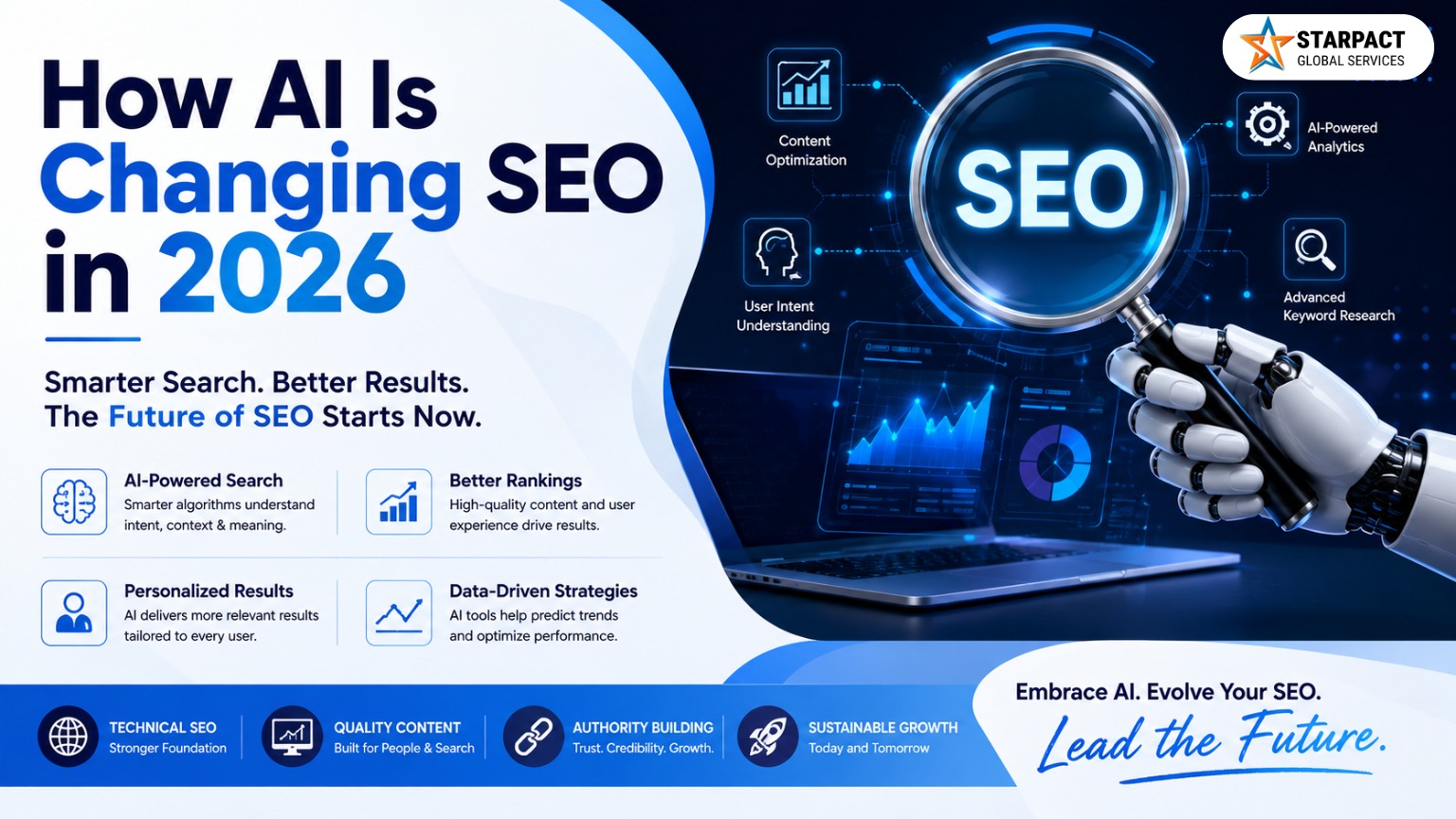
Search Engine Optimization (SEO) has always evolved alongside technology, but the rise of Artificial Intelligence (AI) is creating one of the biggest shifts the industry has ever seen. Search engines are becoming smarter, user expectations are changing, and businesses must adapt their SEO strategies to remain visible online.
In 2026, AI is no longer just a tool for automation—it plays a central role in how search engines understand content, evaluate user intent, and deliver search results. Businesses that understand these changes can gain a competitive advantage, while those relying on outdated SEO tactics risk losing visibility.
Let’s explore how AI is transforming SEO and what businesses can do to stay ahead.
The Evolution of Search Engines
Search engines have moved far beyond simple keyword matching. Modern AI-powered algorithms can now understand context, user behavior, search intent, and content quality more accurately than ever before.
Instead of focusing solely on keywords, search engines now analyze:
- User intent
- Content relevance
- Website authority
- User experience
- Engagement metrics
- Content quality
- Search context
This means businesses must focus on providing genuine value rather than trying to manipulate rankings through outdated SEO practices.
AI-Powered Search Is More Intelligent
AI allows search engines to better understand what users are actually looking for.
For example, when someone searches for:
“Best website development company for small businesses”
Search engines no longer look only for exact keyword matches. They evaluate content that addresses the user’s needs, compares solutions, answers questions, and provides useful information.
This shift means businesses need to create content that solves problems rather than simply targeting specific keywords.
Search Intent Has Become More Important
One of AI’s biggest contributions to SEO is its ability to understand search intent.
Search queries generally fall into four categories:
Informational Searches
Users want to learn something.
Example:
- How does SEO work?
Navigational Searches
Users are looking for a specific website.
Example:
- Starpact Global Services
Commercial Searches
Users are researching before making a purchase.
Example:
- Best SEO agency in Australia
Transactional Searches
Users are ready to take action.
Example:
- Hire an SEO expert today
AI helps search engines identify these intentions and display the most relevant results. Businesses that align their content with user intent are more likely to rank higher.
AI-Generated Content Is Reshaping Content Marketing
AI content tools have made content creation faster and more accessible. However, search engines continue to prioritize valuable, accurate, and original content.
Simply publishing large amounts of AI-generated content is unlikely to produce long-term SEO success.
Businesses should focus on:
- Creating high-quality content
- Adding expert insights
- Sharing unique perspectives
- Updating information regularly
- Ensuring accuracy and credibility
The most successful SEO strategies combine AI efficiency with human expertise.
User Experience Is Now a Major Ranking Factor
AI helps search engines evaluate how users interact with websites.
Factors that influence rankings include:
Website Speed
Fast-loading websites improve user satisfaction and reduce bounce rates.
Mobile Responsiveness
Most users now browse from mobile devices, making responsive design essential.
Easy Navigation
Visitors should be able to find information quickly and effortlessly.
Engagement Metrics
Search engines monitor signals such as:
- Time spent on page
- Click-through rates
- Bounce rates
- User interactions
A positive user experience often leads to better search visibility.
Voice Search Continues to Grow
AI-powered voice assistants are changing how people search online.
Voice searches tend to be:
- Longer
- More conversational
- Question-based
Examples include:
- What is the best digital marketing strategy for small businesses?
- How can I improve my website’s SEO?
Businesses should optimize content using natural language and FAQ-style formats to improve visibility in voice search results.
AI Enhances Keyword Research
Traditional keyword research focused heavily on search volume.
AI-powered SEO tools now provide deeper insights into:
- Search intent
- Content gaps
- User behavior
- Competitor strategies
- Emerging trends
This helps businesses create content that better aligns with audience needs and market opportunities.
Predictive SEO Is Becoming More Common
AI can analyze historical data and predict future search trends.
Businesses can use predictive insights to:
- Identify emerging topics
- Anticipate customer needs
- Create content before competitors
- Stay ahead of industry trends
This proactive approach can significantly improve long-term SEO performance.
Personalization Is Influencing Search Results
AI allows search engines to personalize search results based on factors such as:
- Location
- Search history
- User preferences
- Device type
As a result, businesses must create content that appeals to specific audiences and local markets.
Local SEO has become increasingly important for businesses targeting customers within particular regions or cities.
E-E-A-T Matters More Than Ever
Search engines increasingly evaluate content using E-E-A-T principles:
Experience
Does the content demonstrate real-world knowledge?
Expertise
Is the creator knowledgeable about the topic?
Authoritativeness
Is the website recognized as a trusted source?
Trustworthiness
Can users rely on the information provided?
AI helps search engines assess these signals more effectively, making credibility a critical component of SEO success.
How Businesses Can Adapt Their SEO Strategy
To remain competitive in 2026, businesses should focus on:
Create Helpful Content
Answer customer questions and provide genuine value.
Optimize User Experience
Improve website speed, navigation, and mobile performance.
Use AI Tools Strategically
Leverage AI for research, optimization, and analysis while maintaining human oversight.
Focus on Search Intent
Create content that aligns with what users actually want to achieve.
Strengthen Authority
Publish expert content, earn quality backlinks, and build trust with your audience.
Monitor Performance
Regularly analyze SEO data and adjust strategies based on insights and changing search trends.
The Future of AI and SEO
AI will continue to shape the future of search. As algorithms become more advanced, businesses will need to focus less on gaming search engines and more on creating exceptional user experiences.
The future of SEO is likely to include:
- More personalized search results
- Increased use of conversational search
- Greater emphasis on content quality
- Enhanced AI-driven analytics
- Smarter search engine understanding of context and intent
Businesses that embrace these changes will be better positioned to achieve long-term online visibility and growth.
Conclusion
AI is fundamentally changing SEO in 2026. Search engines are becoming smarter, users are expecting better experiences, and businesses must evolve their strategies accordingly.
Success in modern SEO is no longer about keyword stuffing or shortcuts. It’s about understanding user intent, creating valuable content, optimizing user experiences, and using AI tools effectively.
At Starpact Global Services, we help businesses stay ahead of changing search trends through advanced SEO strategies, website optimization, content marketing, and digital growth solutions. By embracing AI-driven SEO, businesses can improve visibility, attract qualified traffic, and achieve sustainable growth in an increasingly competitive digital landscape.