
Your App Looks Fine—So Why Are Users Leaving?
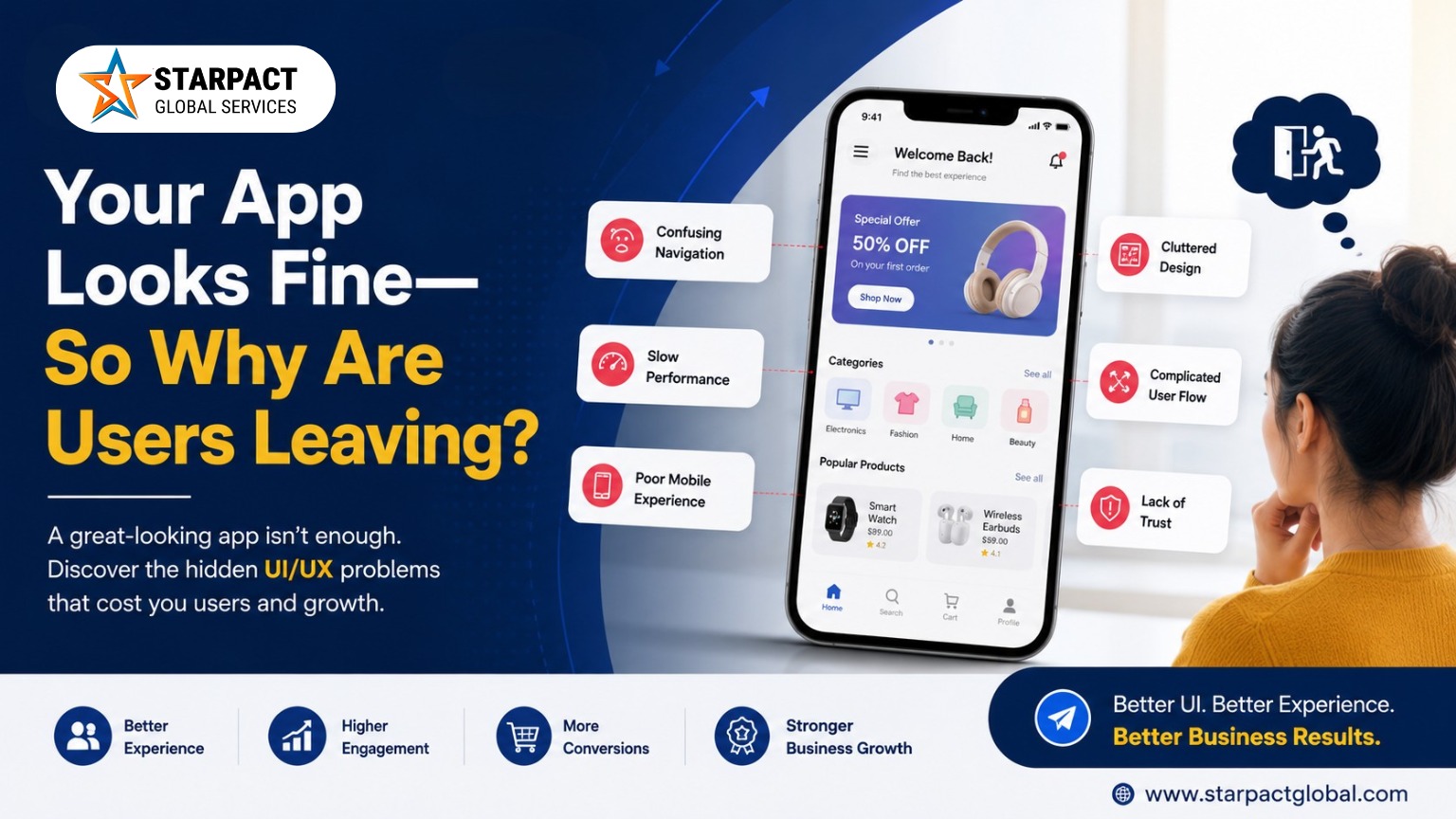
In today’s competitive digital landscape, creating an application is easier than ever. However, creating an application that users love, trust, and continue to use is a completely different challenge. Many businesses invest thousands of dollars in developing mobile apps and web applications, only to discover that users download them, explore them briefly, and then disappear.
The confusing part? The app looks great.
It has modern colors, attractive graphics, and all the features the business believes users need. Yet retention rates remain low, engagement drops, and conversions fail to meet expectations.
So, why are users leaving?
The answer often lies in the difference between looking good and working well.
At Starpact Global Services, we’ve helped businesses transform underperforming applications into user-friendly digital experiences that drive engagement, loyalty, and growth. In this article, we’ll explore the most common reasons users abandon apps and what businesses can do to fix them.
First Impressions Matter More Than You Think
Users form opinions about an application within seconds of opening it. During those first few moments, they subconsciously evaluate whether the app feels trustworthy, professional, and easy to use.
If users feel confused, overwhelmed, or uncertain about what to do next, they are likely to leave before discovering the value your application offers.
A visually attractive design may capture attention, but usability determines whether users stay.
An application should immediately answer three questions:
- What does this app do?
- How can it help me?
- What should I do next?
If these answers aren’t obvious, user drop-off becomes inevitable.
Confusing Navigation Frustrates Users
Imagine walking into a store where nothing is labeled, and products are scattered randomly throughout the building. Most people would leave.
The same principle applies to applications.
Users expect navigation to be simple and intuitive. They shouldn’t have to spend time figuring out where features are located or how to complete basic tasks.
Poor navigation often includes:
- Complex menu structures
- Hidden features
- Too many options
- Inconsistent layouts
- Unclear button labels
When users struggle to find what they need, frustration quickly replaces curiosity.
The result? They uninstall the app and move on to a competitor.
Slow Performance Kills Engagement
Speed is one of the most important factors in user satisfaction.
Today’s users expect applications to respond instantly. Even a small delay can significantly impact engagement.
Common performance issues include:
- Slow loading screens
- Unoptimized images
- Excessive animations
- Heavy background processes
- Poor server performance
Users often associate slow performance with poor quality.
No matter how beautiful your application looks, people won’t stay if every action takes too long to complete.
Feature Overload Creates Confusion
Many businesses believe that adding more features increases value.
In reality, too many features often create a cluttered and overwhelming experience.
Users don’t download an app to explore dozens of options. They download it to solve a problem.
Successful applications focus on simplicity.
Rather than asking:
“What more can we add?”
Businesses should ask:
“What can we simplify?”
The most successful apps in the world are often the easiest to use.
Poor Mobile Experience Drives Users Away
Mobile devices account for the majority of online interactions today.
Yet many businesses still treat mobile optimization as an afterthought.
Common mobile usability problems include:
- Small buttons
- Difficult-to-read text
- Broken layouts
- Slow responsiveness
- Touch targets that are too close together
If users struggle to interact with your application on a smartphone, they are unlikely to give it a second chance.
A truly successful application delivers a seamless experience across all devices.
Lack of Trust Prevents Conversions
Trust is a critical factor in digital success.
Even if users like your product or service, they won’t engage if they don’t trust your application.
Poor UI design can unintentionally create doubt.
Signs that reduce trust include:
- Outdated design
- Inconsistent branding
- Broken links
- Poor-quality graphics
- Unprofessional layouts
- Missing security indicators
Users often judge the credibility of a business based on the quality of its digital experience.
A polished and professional interface builds confidence and encourages users to take action.
Weak Call-to-Actions Lead to Lost Opportunities
Many businesses invest heavily in attracting users but fail to guide them toward meaningful actions.
If users don’t know what to do next, they often do nothing.
Effective applications use clear calls to action such as:
- Sign Up
- Get Started
- Book a Demo
- Contact Us
- Purchase Now
These actions should be easy to find and strategically placed throughout the user journey.
Without clear direction, even interested users can leave without converting.
Poor User Experience Impacts Your Bottom Line
User abandonment isn’t just a design problem—it’s a business problem.
Every user who leaves your application represents a missed opportunity.
The consequences include:
- Lower customer retention
- Reduced revenue
- Higher marketing costs
- Negative reviews
- Increased support requests
- Lower conversion rates
Businesses often spend significant budgets attracting users while overlooking the experience that keeps them engaged.
Improving UI and UX frequently delivers a higher return on investment than increasing advertising spend.
What Great UI Design Actually Achieves
A well-designed application does more than look attractive.
It helps users accomplish their goals quickly and efficiently.
Good UI design:
✔ Improves engagement
✔ Increases retention rates
✔ Builds trust and credibility
✔ Reduces user frustration
✔ Strengthens brand perception
✔ Increases conversions and sales
When users enjoy interacting with an application, they are more likely to return, recommend it to others, and become loyal customers.
How Starpact Global Services Helps Businesses Create Better Applications
At Starpact Global Services, we understand that successful applications require more than just great visuals.
Our team combines strategy, design, and development to create applications that deliver exceptional user experiences while achieving business objectives.
Our services include:
- UI/UX Design
- Mobile App Development
- Web Application Development
- Responsive Design
- User Journey Optimization
- Performance Enhancement
- Application Redesign Services
We focus on creating digital experiences that are intuitive, engaging, and built for long-term success.
Final Thoughts
If your app looks good but users continue to leave, the issue may not be your product—it may be the experience you’re providing.
Today’s users have endless alternatives at their fingertips. They expect applications to be fast, intuitive, and effortless to use.
Businesses that prioritize user experience gain a competitive advantage, while those that ignore it risk losing customers to better-designed competitors.
Your app doesn’t just need to look professional—it needs to work beautifully.
Ready to build an application your users will love?
Starpact Global Services specializes in creating modern, user-friendly applications that drive engagement, improve conversions, and support business growth.
🚀 Contact Starpact Global Services today and transform your app into a powerful business asset.